
I was playing my Vintage V880N cedar top small body (aka parlour) guitar and noticed that the bridge was lifting at the back. This is a common fault with cedar tops especially but often found on old acoustics even if they have always been strung with the correct light gauge. The best solution is to remove the bridge using heat to break the glue bond then reglue the bridge after cleaning up the top to remove glue, but this can damage the finish making a full luthier repair including top refinishing desirable.
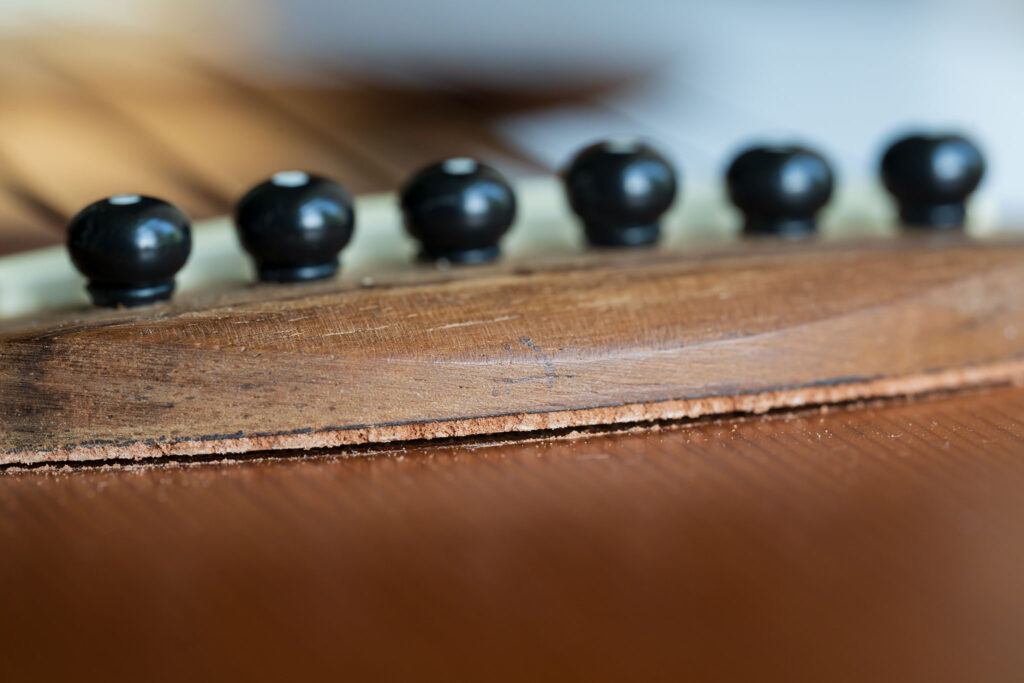
What confuses here, once the camera was used, is that the bridge has a wooden shim between it and the top. This is not the result of a past repair and there’s no reason for it.
The V880N only cost £149 new (now generally £199 if it can be found), solid cedar top and laminated mahogany body with a slotted headstock and decent strip tuners. Despite its playability it’s not worth doing that. There’s a Fishman active undersaddle in it which is worth more than the guitar but is easily transplanted should that time come. It has a 36.5mm nut string spacing which for me is very narrow – my regular Lowden S32 is 38.5mm, my Sigma OMT is 39.5mm and if I want to spend money on my ‘small guitar’ option I’ll look for one with this kind of spacing, which means a wider than 45mm nut would be ideal.
So when I saw a product on Amazon which solved the old problem of using deep G-clamps, for a very modest £10 (now just over £11, probably down to Chinese exchange rate), I ordered it. It arrived nine days later. It is a maple clamp which uses the bridge pin holes to fix a re-glued bridge down (this is an Affiliate Link which may earn me a few pennies).
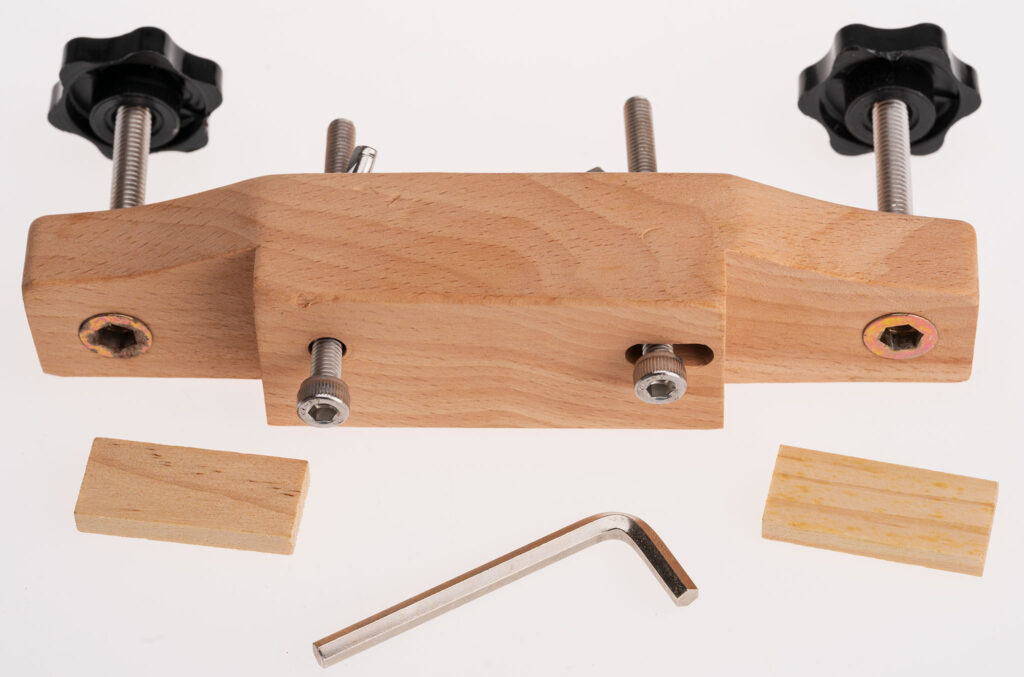
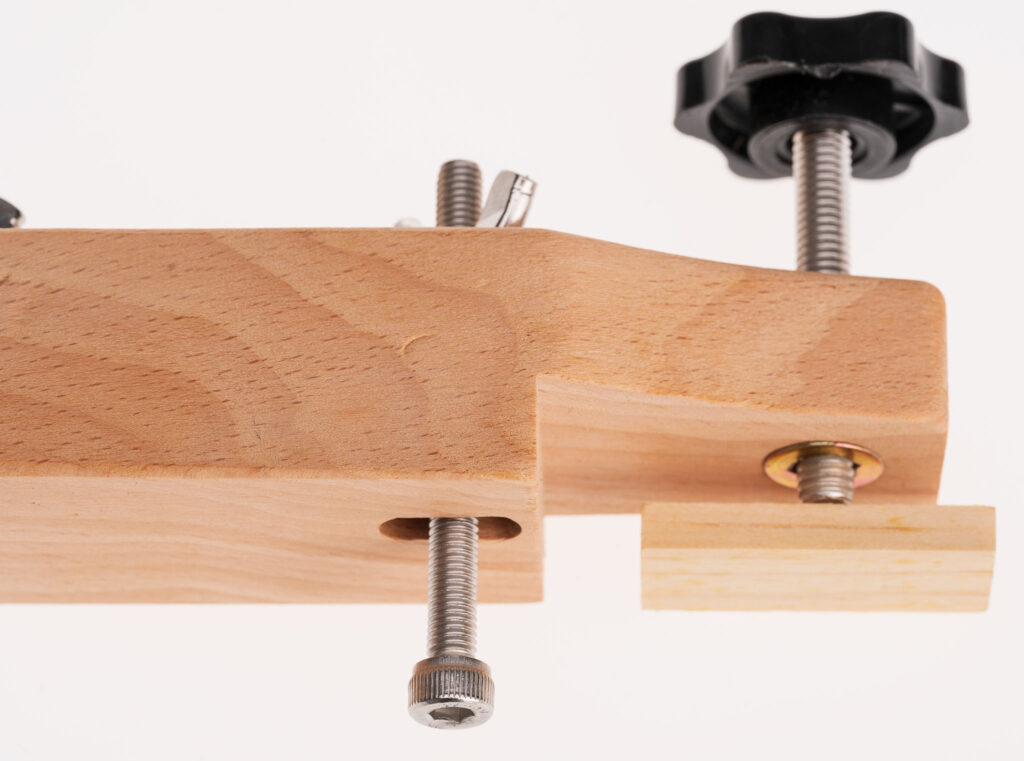
The two wooden spacers could be replaced by any other pad and it might be worth adding washers. In practice it takes no time at all to fit.
Given the shim and the low value of the guitar, I chose to thread low viscosity cyanoacrylate (superglue) into the crack where the bridge lifted. A very small clean line of the glue is visible but of no concern cosmetically and a useful sign to any future luthier of the nature of the repair.
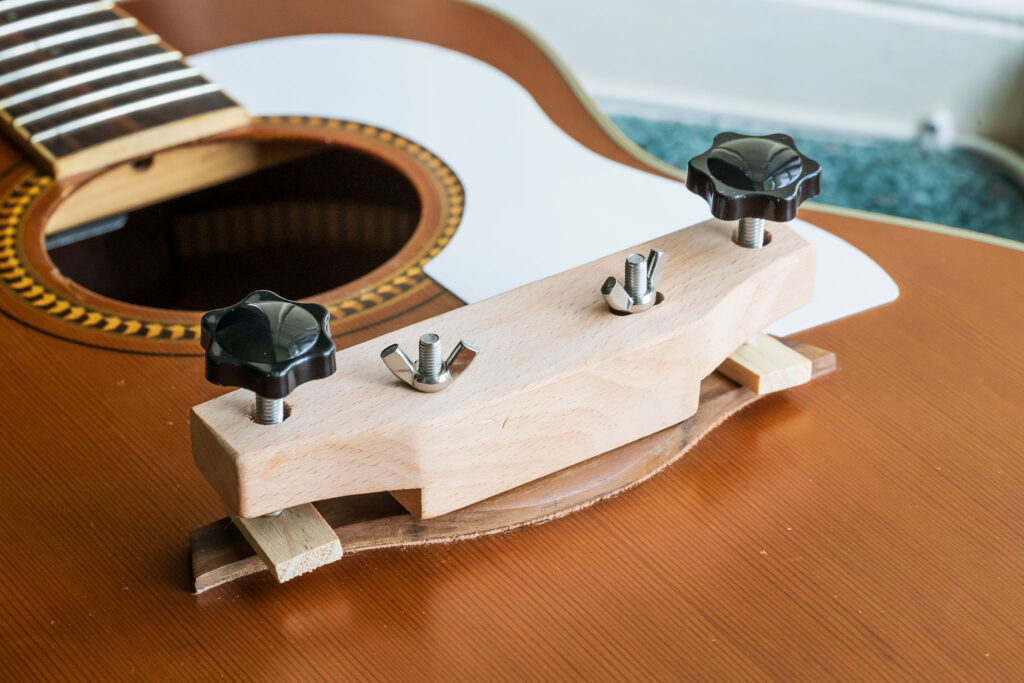
The result has solved the lifting bridge and took about half an hour, with a 24 hour wait in the middle of that time to be sure the glue had cured before popping the strings back in and tuning up.
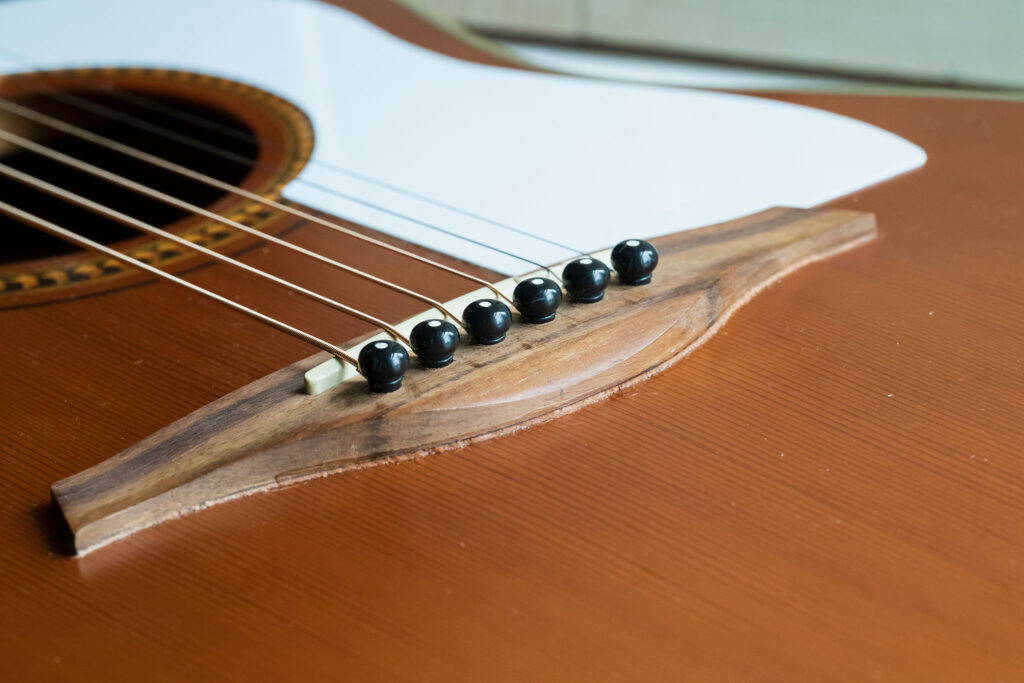
Time will tell how this repair has worked, but for any kind of similar pin bridge repair (no use on my Lowden, classical or Tacoma instruments with pinless bridges) this inexpensive clamp is great. You could make one yourself but this, with its adjustable spacing matching typical bridge spans and its long screws matched to pin holes, is oven ready as delivered.